by Dan King | Oct 21, 2020 | business strategy
Growing your business requires that you find ways to increase your sales revenue. That’s foundational. New sales are the lifeblood of every business. So I want to show you what we did to get a 154% increase in monthly new sales revenue by making one simple change.
And it made my sales process easier than ever.
The best part?
Much of the sales process is now on autopilot. And we’re continuing to experience even greater growth over time (since this study). That’s because the solution has growth and continual improvement built into it. Again, this was all done without adding complex processes and effort.
And in this case study, I’m going to show you exactly what we did and the step-by-step process we implemented to hit this incredible sales growth.
The Day I Realized That Sales Shouldn’t Be Difficult
Since the day I started Fistbump Media, I’ve racked my brain to figure out how to drive more sales. I’ve studied sales processes, funnels, online tactics, and several dozen tools that are supposed to help me grow my business.
I’ve learned over time that one of the most important assets you have is your database of leads and customers. Success in sales growth is a direct result of how you leverage all of that customer (and potential customer) data. So that means you need a good customer relationship management (CRM) tool to manage all of that information.
Over the years, I’ve tried lots of them. I even launched an extensive conversation on LinkedIn to see if I could find some good ones, which lead to one that I tried for a full year before giving up.
The problem was that none of it made my sales process easy to manage. Not did they really help me grow. It just always felt like a herculean effort to get manage the process.
That’s when I decided to switch to the HubSpot CRM.
I’ve always loved their (free) e-courses, and every glimpse I’ve gotten of the tools just made it look super easy to manage. And that’s what I was looking for. A simple tool that could help me grow.
So I made the leap.
And I was surprised at what happened next…
Download Your Free Guide Now!
An Immediate Increase In New Leads (and Sales)
Over the two year period, I used two different CRMs. The first 12 months was with a CRM I found through extensive research. I’ll keep it nameless, because it’s not my goal to diminish it as a tool. It was pretty standard as far as CRM tools are concerned, and it had plenty of nice features. Then I switched to HubSpot and tracked the same progress over the next 12 months.
During this time, my overall marketing approach hadn’t changed significantly. I only used what the tools offered to me.
For the time frame covered, it’s worth noting the change in traffic to our website. The numbers are all monthly averages, with the “before” numbers covering the time using the old CRM and the “after” numbers covering the time using the HubSpot CRM.
New Users (Website): Before
New Users (Website): After
The increase here really had nothing to do with the CRM use itself. I attribute it mostly to ongoing returns from our search engine optimization efforts over time.
It’s worth noting this number so that we can understand the differences in other numbers we monitored over this period.
Another increase we experienced was with the average number of new incoming leads per month.
As you can see, then number of new leads coming in each month increased at a higher rate than that of the website traffic. The web-to-lead conversion rate increased from 3.2% with the old CRM up to 4% with HubSpot.
I attribute that increase to the ways HubSpot integrates into my WordPress website compared to other CRM tools. I’ll cover this in more detail shortly, but HubSpot is certainly better at helping me capture visitor information and bringing them into the CRM as leads.
It’s also important to note that part of the time HubSpot leads we’re being tracked included February and March of 2020, as the Coronavirus pandemic was starting to impact everything. With all of the uncertainty individuals and businesses encountered, we went through a 6-week period with only one new incoming lead. So the difference is actually more extreme if we just considered “ordinary” months.
The next change we experienced was with the average number of new orders (sales) closed on average.
The increase with sales closed is nearly identical to the percentage increase in new leads because our close rate stayed pretty consistent. We didn’t really change much with the actual sales process, so the increase in leads basically increased sales at the same rate.
But one thing that was interesting was the increase in the dollar value of the average sale.
Over this period of time, we did not add products or change prices significantly.
The biggest difference was the fluidity of our sales process. With HubSpot’s WordPress integration, we had better insight into what leads were doing on our website. The extra data points helped us to better position products and even offer upgrades that clients might be interested in. In the end, we saw higher-dollar sales orders closing.
Following this through, more sales closing at higher dollar figures meant that we saw a significant increase in total new revenue per month.
With these figures, I’m not estimating ongoing/recurring revenue. I’m only tracking the initial order.
In the end, we experienced a significant lift in revenue growth by switching from another highly rated CRM to the HubSpot CRM. And we did that without doing more marketing or making changes to our sales process. Ultimately, it’s just a case of how a better tool can make a huge difference.
How exactly did we do that? Keep reading to see how you can increase sales like this too…
The 3-Steps To Increase Sales With the HubSpot CRM
The implementation of HubSpot and accomplishing this kind of growth involved three main phases. Each step required little effort but carried a high impact. This is what we did…
- Step #1: Migrate existing contacts and set up the CRM
- Step #2: Integrate with your existing website and email tools
- Step #3: Optimize and build out lead management processes
Here’s why this was so effective (and easy to implement)…
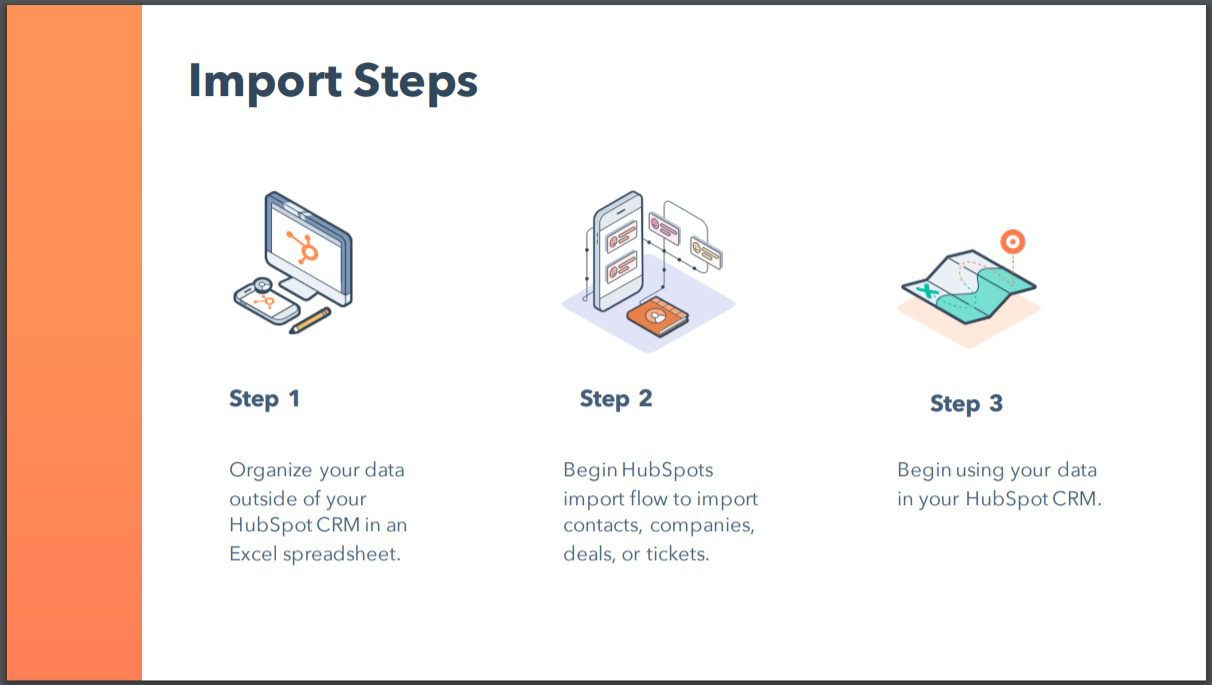
First, migrating our existing contacts into HubSpot allows you to start right away with improving your marketing and sales processes. No matter where you currently manage your contacts, you should be able to export them in a basic (CSV) spreadsheet, which can be imported directly into HubSpot.
HubSpot makes the process so simple, I believe I had all of my contacts from our previous CRM imported within about 10 minutes.
It’s not a complicated setup, allowing you to start realizing impact almost immediately.
Second, the integration process with our existing website and email tools via a WordPress plugin and Chrome browser extension (for Gmail) allowed us to start tracking contact activity immediately.
The total setup for both of these integrations took just a few minutes. The immediate tracking capabilities it brought instantly improved our insight into what our contacts were doing based on our efforts.
You can start making better decisions and having more meaningful conversations with your contacts right away.
Third, optimizing and building out your lead management efforts flows naturally with insights provided by HubSpot tools and reporting. Plus it offers tips to help you understand how you can improve every communication you have with your contacts.
You don’t have to take complex sales training courses or implement new techniques to improve your sales.
Honestly, you’ll get better at selling just by using the tools built right into HubSpot.
Step #1: Migrate Existing Contacts and Set up The CRM
If you already have any kind of list or database of contacts (customers and/or leads), then that’s the best place to start. With contacts in your database, you can start implementing your lead management strategy right away.
With your existing customers, you’ll be able to build up a better ongoing communication strategy. Just because a contact bought something from you once doesn’t mean they no longer have value. They can be a great source for both future sales and referrals. Keeping in touch with them is a key piece to developing that strategy.
If you have existing leads you’ve gathered, then beginning to manage them in HubSpot will give you some great tools to manage them better. Things like email and website activity tracking will give you much better insight into how you can position your products. And positioning your products well can result in higher close rates and higher revenue per order.
The process is simple…
In a nutshell, get your data into a spreadsheet (existing systems should allow you to export your information into a CSV-format spreadsheet). And then upload that spreadsheet to HubSpot. The process will give you the opportunity to match up fields (so phone number goes to a phone number field, etc), and create custom fields for more specific data that you like to manage with your contacts.
If you need to create your own list from scratch, then HubSpot has a spreadsheet template you can use.
And I mentioned how great HubSpot’s e-courses are… they also have a great (and short) course on how to get your data into the HubSpot CRM, complete with video walk-thru help on everything in the process.
Depending on how you currently manage your data, this process can take as little as a few minutes. Then you can start to increase sales revenue right away. More on exactly how to do that in a moment…
Step #2: Integrate With Existing Website and Email Tools
The next step will almost instantly help you increase the number of leads you’re capturing.
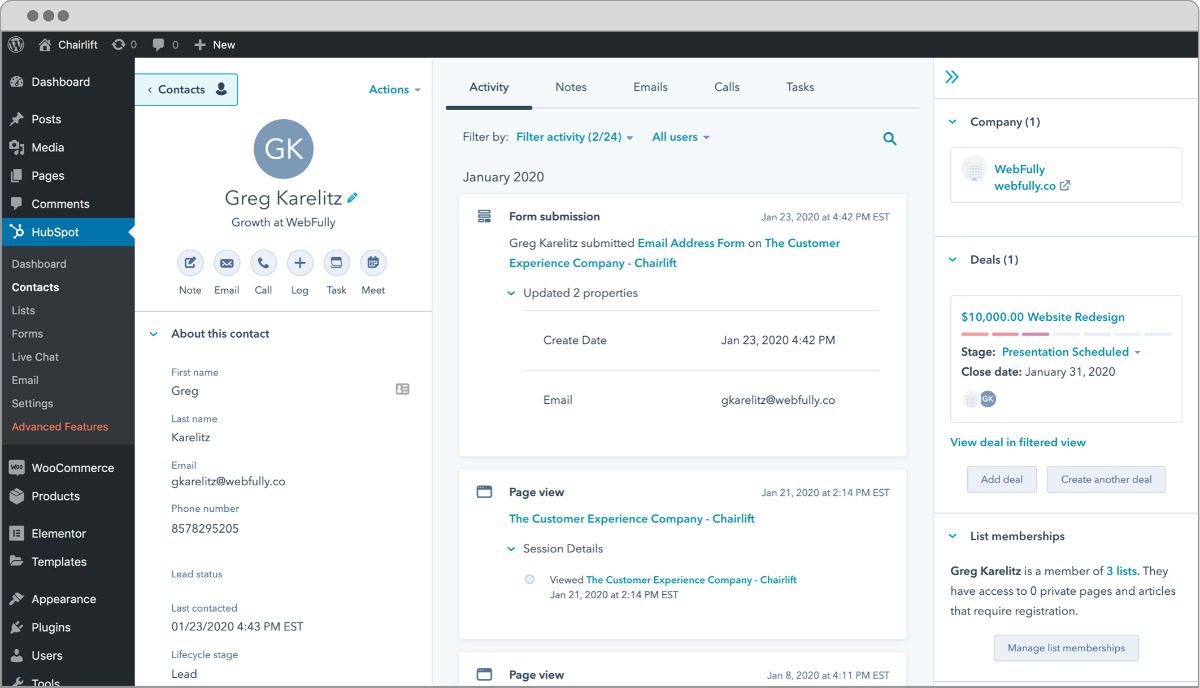
If you’re running a self-hosted WordPress website, then HubSpot’s WordPress plugin is a simple way to integrate the power of HubSpot into your website. Not only will you be able to access your HubSpot CRM dashboard and tools directly in your website’s WordPress Dashboard, but you’ll also be able to:
- Easily add HubSpot forms to your website
- Capture data from non-HubSpot forms as leads in the CRM
- Add website chat tools to your website (which also turns new chat contacts into leads in your CRM)
To add the HubSpot plugin to your WordPress website:
- Download the HubSpot plugin for WordPress
- Upload (and activate) the plugin to your WordPress website
- Log in to your HubSpot account through the plugin settings on your website
That’s it! And while there is a lot you can do to optimize this over time, this will help you start capturing leads right away.
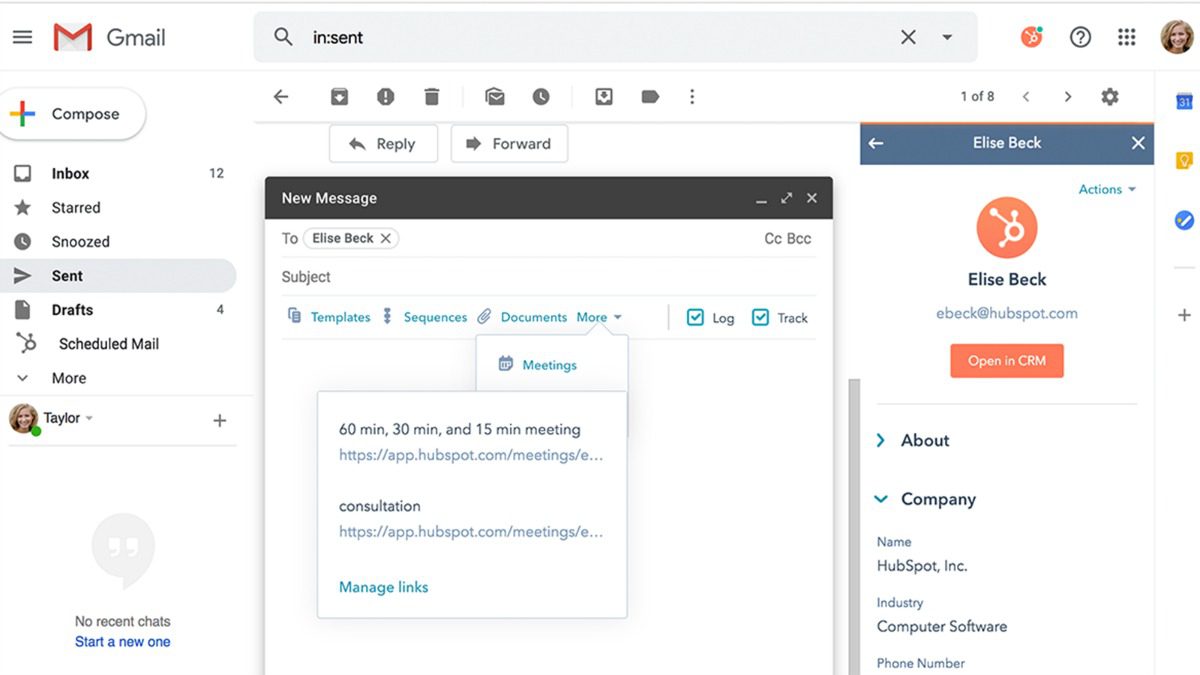
The other big integration you should set up right away is the email integration. We use Google Workspace (formerly G Suite) for our email (and other functions). And HubSpot has a free app to connect your Gmail to your HubSpot account. There are also apps available for Outlook (and other email tools), if you don’t use Google Workspace.
The email integration is going to do two main things for you:
- It brings your contact information from HubSpot into your email inbox
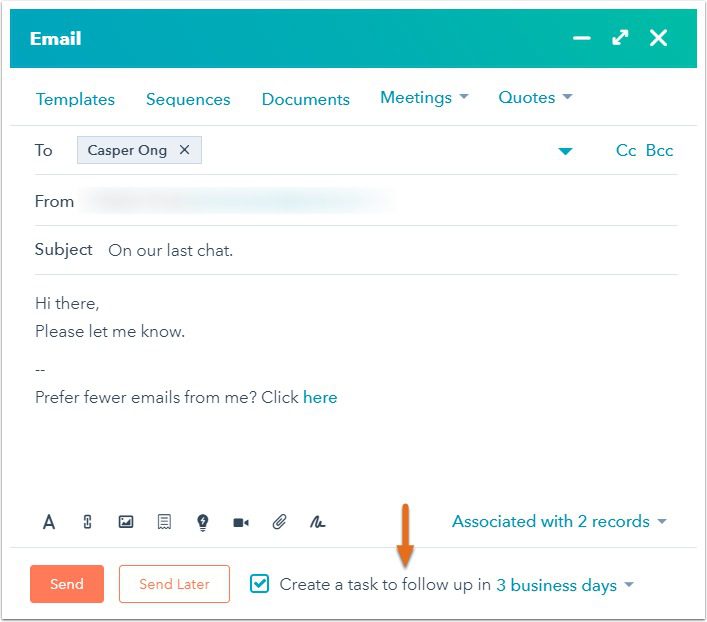
- It adds some great tools to your email to help with managing and tracking contact activities
The email tools will not only increase the impact of your email communications, but it also decreases your effort by automatically connecting and logging the email conversations on your contact records in the CRM.
To add this, simply grab the extension from the HubSpot App Marketplace, or get the extension from the Chrome Web Store.
Both of these integrations will immediately supercharge your lead capture and management efforts. The next step is to start optimizing to help you get the most out of the HubSpot CRM…
Step #3: Optimize and Build Out Lead Management Process
This next step is more of an ongoing process, as opposed to a one-time setup step. Ultimately, it’s great to have fully-developed automated email sequences. But if you don’t have that now, you shouldn’t feel overwhelmed with trying to create them from scratch.
The way we’ve approached it is to just build in a process of continual improvement. In fact, even where we’ve built those sequences, we’re continually working to improve them.
This approach allows you to start reaping rewards and increase sales revenue right away, with little effort. And improving it over time means that you’ll always be growing.
Here are some of the core guidelines we followed to realize our growth (and continue to see even more as we continue to evaluate and implement improvements)…
1. Start communicating with existing customers regularly
One of the sources of sales is customers who have already said “yes” to you previously. So an important part of your strategy should include keeping yourself visible with those existing customers.
Don’t just assume that they are always thinking about you. You need to keep yourself top of mind with them. And it’s not about “selling” to them constantly. All you need to do is just share what’s going on with them.
In HubSpot, we’ve started sending a once-per-month client newsletter. In it, we share things like:
- Company updates relevant and of interest to customers (i.e. system enhancements designed to make their interaction with us easier, etc.)
- New product and service launches
- Tips and tricks to manage their services better
- Customer service related resources
- New and trending blog and webinar content
- Ask for reviews and feedback
Sharing these updates regularly has resulted in higher engagement with our content, more appointments booked, and better (and more) reviews from our customers.
And with HubSpot, it’s simple to create your newsletter using built-in and customizable templates. Then just clone your previous email each month and make a few updates to the content. Putting together the newsletter each month takes about 15 minutes, and returns some great results!
2. Develop email flows with new leads
Eventually, having well-formed automated email sequences is the way to go. It’s going to be a far more efficient way of managing communications with incoming leads. However, when we made the switch to HubSpot, we simply didn’t have them. We tried developing them in previous CRMs. We just never for the traction to see them return good results.
That’s why it’s best to take a growth-driven approach.
As new leads come in, I would respond to each one individually by email. Then, with each email I sent, I would create a follow-up task in HubSpot to trigger me to send my next email.
Then I would monitor my task list for follow-ups that needed to happen each day. And as I worked on the tasks, I would review the contact’s activity to help me refine how I would focus my next email. Did they open the previous email? Did they click on any links? What pages did they visit on the website as a result?
After working the leads this way over a period of time, I started to get a good feel for what I got a pretty good feel for what was working well(and what wasn’t). Then I basically copied my best efforts into an email sequence that I could start using for future leads.
Using this approach, not only did I simplify my email automation development, but I also realized some great results…
- The email open rate on our sequences is steadily over 60% (industry standard is 15-25%)
- The click-thru rate runs over 7% on average (industry standard is 2.5%)
Even with strong rates like that, we monitor ways to continue to improve on that too!
3. Follow the data
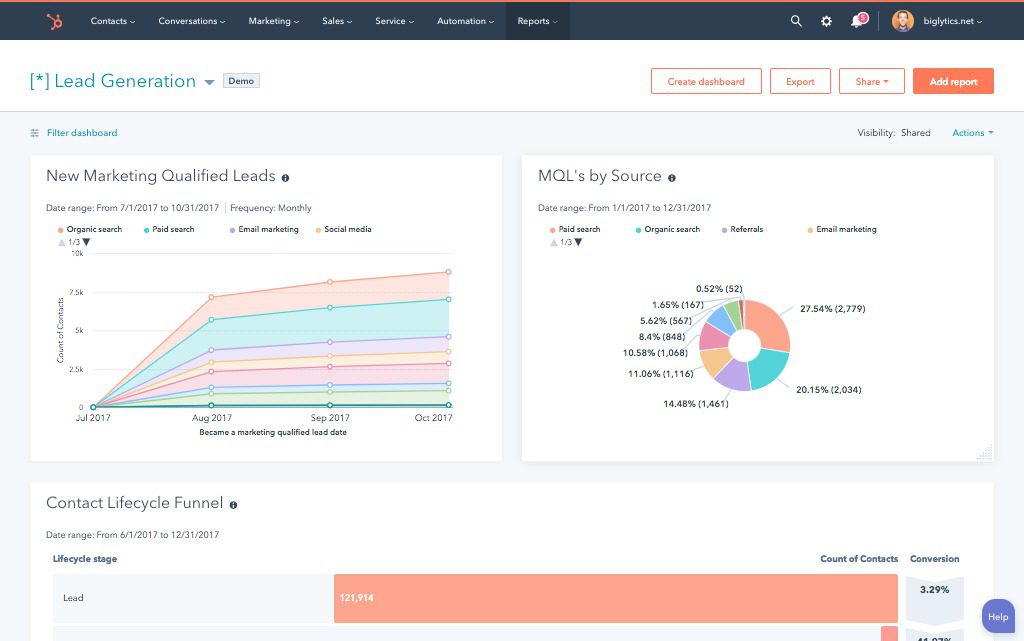
This is where some of the greatest power comes in. The information available to help you see how your efforts are trending, and help you make better decisions, is at your fingertips.
The best part is that it’s not presented in a confusing or overwhelming way. So you don’t need to be a data scientist to figure out what you’re looking at. Here are a few ways you can use the data and reporting to improve your efforts over time…
- Which emails are working best? You’ll see open rates for your emails, which tells you how effective your email subject lines are. And you’ll see click activity in your emails so you know what’s driving people to action. I’ve looked at emails with high click-thru rates and applied those practices to emails with low click-thru rates. In the end, it’s raising the impact of all of my emails.
- Which marketing channels are working for you? Determine the effectiveness of your efforts on social media compared to visitors coming from search engines (or whatever source). When you can see how effective various channels are, then you’ll know where to invest your efforts to drive even better growth.
- What is your return on investment in online ads? HubSpot connects with various online ad platforms (Facebook and LinkedIn) and can help you determine the exact ROI on your ad campaigns. How many clicks on ads are turning into leads, and how many of those are turning into customers? You’ll drive better impact when you can see what’s really working and what’s not.
If you send just a little time regularly looking over the data and performance reports, you’ll quickly identify some ways to improve what you’re doing. This continual improvement will be a major driver of increased sales growth over time.
4. Leverage lists to target communications and offers
Another way to increase sales is to manage contacts using targeted lists. Once you have contacts on various kinds of lists, then you can target specific types of communications towards them. Personally, I think there is nothing worse than scatter-spray marketing. That’s throwing everything out to everyone, and hoping that someone gets it.
With us, our clients come primarily in two groups, writers/bloggers and small businesses. It’s not a stretch to see how interests for one group may be different than the other.
With lists targeted at each of these customers (and leads), then releasing something like a new e-course on self-publishing only needs to go to the writer/blogger contacts. Likewise, promoting our local business directory link-building services can be promoted just to the small businesses. Promoting either of these things to everyone is going to make it fall flat and likely just end up annoying some contacts due to too many irrelevant emails.
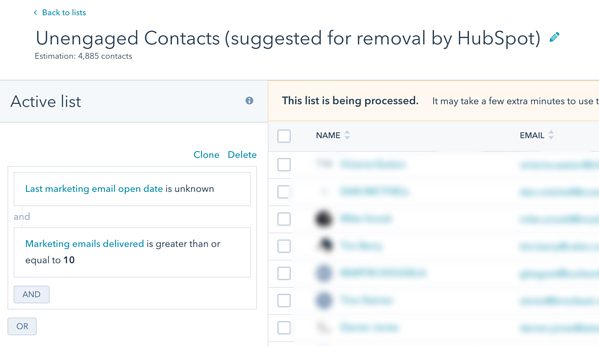
Lists can also be used to filter out people based on their activity (or inactivity). And that can not only help you keep your database clean, but it can also help you even further target the types of communications that might re-engage them. That leads me to my last point…
5. Never give up on a lead
One of the big things HubSpot has helped me do is to not give up on any of my leads. And it’s paid off with increased sales!
I’ve seen at times when I might send someone 2-3 emails and not get a reply. But in HubSpot, when I look at the contact details, I might see lots of opens on the emails and lots of clicks to the website. So even though I don’t see a reply, I might still see them being very engaged. That’s a signal to me to not stop! But if all I knew was that they weren’t responding to my emails, then I might be inclined to give up.
I also have a list that I move people to after they’ve finished automated sequences without any further engagement. These people go onto a list that gets a monthly featured “best offer” email to attempt to re-engage them. These emails regularly get these otherwise “cold” leads to pop up and end up becoming customers.
Persistence is the key. So having a strategy for how you will continue to engage (yes, even cold leads) over the long-term is incredibly important. And don’t take silence as a “no” because often it just means they’ve been a little too busy to respond at the moment.
If you’re trying to increase sales revenue, then you’ll want to get every bit of opportunity you can find out of your leads. So… NEVER give up on a lead (unless they specifically unsubscribe).
Download Your Free Guide Now!
How You Can Increase Sales Revenue For Your Business
I don’t know about you, but as a small business, we like to increase sales revenue! And doing so cannot be something that adds expense (that doesn’t get a return) or complicate processes. That’s really been the best thing about switching to the right CRM.
While the CRM itself is free, we do pay a little bit for the Marketing Starter and Sales Starter plans. But the increase we’ve seen in sales more than pays for that cost. And we’re continuing to grow and increase sales even more! Here’s what this switch has meant to us:
- Simplified our sales process
- Improved our marketing effectiveness
- Given us the information to have more meaningful conversations with contacts
- Provides the data to help us commit to continual improvement
- Saves us immeasurable time
I’ve honestly always dreaded trying to figure out how we’re going to drive sales growth. Always sorting through sales strategies (and gimmicks) and trying tools that over-promise and under-deliver. I’ve earned more grey hair from trying to find the right formula than from any other aspect of running the business. But now it just feels right. I’m having fun trying things and watching the impact of our efforts.
And we’re seeing the results.
So if you want to try the HubSpot CRM, and have questions. Then grab 15 minutes on my calendar to talk through it. Just use the scheduler below to get some time. (And FYI… that’s from HubSpot too!) There’s no obligation to talk, and I’m happy to just answer any questions you might have and see if I can steer you in the right direction with this.
#fistbump
FTC Disclosure: We are a HubSpot affiliate and receive a commission when you purchase. The results we share are our own and from our own data tracking efforts. We promote these tools and services based on our actual experience and confidence in the results they provide.
by Dan King | Sep 9, 2020 | publishing strategy
Are you looking to self-publish your work? If so, it’s crucial to learn the ins and outs of some of the most common self-publishing mistakes. In learning of these mistakes, you can set yourself up for the most success possible.
What are the most common self-publishing mistakes, you ask? To help, we’re shining a light on the eight most common mistakes that authors make when self-publishing their work. From your blog layout and editing to market research and timelines, we’re covering it all.
Before you publish your work, you’ll want to avoid these mistakes at all costs. It’s time to learn from those who have self-published their works before you!
1. Self-Editing
Of course, it’s always tempting to edit your own work.
While this is a cost-effective means of editing, it’s also setting yourself up for disaster. Not only will a professional editor spot typos and grammatical errors, but they’ll also highlight structural sentences that need improvement. If you’re looking to make money with self-publishing, you need to be serious about hiring an editor. At a minimum, use a tool like the Hemingway Editor for an automated way of checking your work.
Without proper editing, your work is very likely to have some standout mistakes. From the perspective of your readers, this makes your work more difficult to enjoy and take seriously.
2. Insufficient Market Research
In order to maximize the success of your works, you’re going to want to conduct proper market research.
This market research will tell you what readers are interested in right now. It’s also going to help to provide clarity in terms of the length, format, and general structure that readers currently most desire.
Remember, your goal is to create material that your readers are actively interested in. In order to know what the public wants, it’s imperative to spend the time necessary and conduct this research.
3. A Lack of Timelines
In the self-publishing world, you’re essentially only working for one person. For better or worse, this one person just so happens to be yourself.
While there are benefits to creating all of your own rules, this can also be a dangerous game. This is especially the case when it comes to establishing a strict timeline for your works.
When using a professional publisher, that individual will set concrete timelines that you must adhere to. When you’re working for yourself, this simply isn’t the case. With this, it’s only natural for your level of motivation to decrease.
To counteract this, be sure to set strict timelines for yourself. You can also share these timelines with other people to increase your accountability.
4. Incorrect Formatting
Every type of work will require a different sort of formatting.
For example, the formating for regular blog posts could be entirely different than the formatting for a standard novel. If you’re new to publishing, understanding the right formatting won’t always come naturally.
In most cases, the correct formatting will be entirely dependent on the forum in which you’re publishing. For example, one blog may require writers to submit their work in a Microsoft Word document while others require an Adobe PDF file. To ensure that you’re adhering to the right formatting, be sure to conduct the right research and ask questions.
5. A Poorly-Timed Release Date
What’s the best time to release your work?
When it comes to self-publishing, there are good times and there are bad times to release work. Of course, this timeline will also depend on the subject matter of your work. This is where conducting market research comes into play yet again.
Do yourself a favor and dig online for more information. Your goal is to find a relevant time to release your work. This is a time in which your audience will naturally feel more inclined to read works on your subject.
While the average person reads 12 books a year, it’s more important to figure out what time of year people read the most. With this, you may want to release your work during a time that people are more likely to spend their time reading. This is why many authors choose to release their work in the summer when people typically have more time to relax.
6. A Lack of Notable Reviews
At the end of the day, reviews are an incredibly important part of any kind of brand-building.
Just as 90% of consumers will read reviews before visiting a business, so too will your readers. This is why having notable reviews on your work has become a key to success.
Unfortunately, those that self-publish are far less likely to have a variety of reviews. This is as compared to work that has been professionally published and often uses notable people to create an interest in your work.
Even in the event that you’re self-publishing, do your best to get as many people to read and review your work as possible. Once you have these reviews, ensure that you’re advertising them both physically on your work and on other platforms such as social media.
7. Asking for Minimal Feedback
When you choose to self-publish, you’re minimizing the feedback that you’ll receive on your work.
Of course, receiving harsh feedback can be challenging for some. But, it’s also the best way to ensure that what you’re putting out there is your best work possible. When it comes to writing, your reputation is everything.
With this, it’s crucial to ask for as much feedback as possible. Try to get as many people in your network to review your work as possible. From here, don’t be shy in asking for their honest feedback and suggestions. After all, this is the only way to better yourself as a writer.
8. Incorrect Pricing
Sure, you might be a professional writer. But, this doesn’t mean that you know the best strategy for pricing your works.
With this, self-publishing authors will often undervalue their work and price their work far too low. On the other hand, if you price your work too high, fewer people are likely to purchase it.
To help arrive at a fair pricing strategy, be sure to research what other works under the same subject are selling for. And evaluate how well those books are selling at various price points. With this, your best bet is to match this price or come slightly above or below it.
Common Self-Publishing Mistakes to Avoid
To self-publish or to seek professional help? That is the question!
The truth is, self-publishing your work can lead you to success. It’s also a great way to save money and adhere to your own rules. But, in doing so, it’s imperative to ensure that you’re avoiding all the most common self-publishing mistakes.
In understanding these mistakes in advance, you can take extra caution when moving forward with your works. With this, you’re all the more likely to maximize your chances of success!
Are you looking for more guidance on self-publishing? If so, be sure to check out our 30 Days To #SelfPub e-course!
by Dan King | Mar 25, 2020 | business strategy
I’ve always been a big believer in the power of webinars! Not only do I enjoy learning from them, but we’ve also been building a library of webinar content of our own for years. And with recent shifts to moving more digital, webinars can be a great tool to help you expand the reach of your business. But the average business owner has no idea how to create a webinar.
So you know when one of my favorite resources, SEMrush, hosts a Twitter chat on the subject, I had to be there. The SEMrush webinars are some of the best out there, and they’ve helped me stay on the cutting edge of digital marketing for several years now. And having their Head of Global Marketing, Olga Andrienko, and their Head of Video Content, Anton Shulke, on the chat was a huge bonus. They are the real deal!
And because the focus of this chat was so valuable, I thought I’d share the highlights of the conversation here. I also thought it would be a good place to add a few bonus tips and resources if you’re exploring how to create a webinar for yourself.
Here’s the conversation…
Q1. Free or paid: How do you decide whether to charge for your online conference or webinar? What other ways have you found to monetize online events?
The big thing with how you use them is determining what your goal is for them. Generally, free webinars can be great for lead generation and nurturing. But there’s also a sales opportunity for deeper and more exclusive content too. Here’s what Olga and Anton had to say about it too…
I definitely agree with the idea that with a slowdown with in-person conferences, many are going to find ways to do more online. This certainly represents some great opportunity to innovate and reach more people with premium content.
Q2. What platforms and software are best for hosting online events?
Specifically, I use the OBS Studio software to manage what my live webinar video feed looks like, but YouTube Live can be broadcast with just a webcam. This can also be accomplished with your mobile phone and Facebook Live. You’re really pretty unlimited with options for how you broadcast a live event online.
Ultimately, the software and platform you use will depend on your goals. If lead capture is important, then that needs to be part of how you set it up. It doesn’t need to be complex, and often the simplest way to get started is to get the registration done by creating a landing page for the event on your own website. Then you can communicate with that email list as the event approaches. This way you can point them to anywhere you plan to run the broadcast.
Q3. Checklist: How do you ensure the quality of the stream?
I saw some chat going on about connecting via wi-fi. And the only time I would suggest that is when you’re conducting some sort of live stream from your mobile phone. But if you’re planning to create a webinar a little more formally, then run it from your desktop and make sure you’re directly connected (if possible). I would also suggest that if you’re just getting started, then don’t sweat it with getting lots of fancy equipment. If you have a webcam with a mic, then you can do it. As you get into it over time, then consider upgrading to improve quality and performance.
I definitely appreciate the focus on the setting you use when you create a webinar. Things like lighting, background, etc all can make a huge difference in how your broadcast comes off to a viewer. The big thing here is to show that you cared enough to put the effort into creating a good environment for your viewers.
Q4. Self-hosted or including guests: What makes some formats more successful than others?
Really, the bottom line for me here is that adding more people to the webinar broadcast (remotely) adds an additional layer of complexity in pulling it off. It’s not super difficult, but it is an extra layer. And ultimately, I haven’t seen the difference in goal performance when I have others on with me or not. So I tend to just keep it simple, and create my events. But that doesn’t mean I’ll always do them solo.
This is really another one that depends on your goals. I can also say from my experience that it’s difficult to keep people’s attention as a solo presenter for longer periods of time. If I’m on an hour-long webinar, then having multiple people in a conversation certainly helps. But I’ve been experimenting with doing shorter 20-30 minute webinar sessions, which is more manageable for the viewer when I’m going solo. But the key here is to test some variations, and measure how they perform. The data will tell you what you can reasonably do.
Q5. How do you measure the success of the online event?
When measuring success, things like the number of registrations I get tell me how helpful the topics are. And success is mostly determined by the number of inbound leads it generates. I’m not looking for instant sales either. But the inbound lead gets some follow-up and an offer for a free consultation. If they don’t bite right away, I don’t sweat it. They end up on my “webinar club” mailing list and get notifications of upcoming webinars. And I’ve seen some of these people reach out to us after viewing several webinars asking us for help with their projects. Ultimately it’s a long-game, and then just continuing to work my email list over time.
I also look at the long-term usefulness of each webinar. I evaluate how much I direct people to webinars in other ongoing sales and support conversations. Even old, recorded webinars carry a great deal of value over time as I support the conversations we have with clients and potential clients. That’s not to mention how we can trim out sections of the video to repurpose for some short-form social media posts. I love repurposing content!
Q6. Social media, paid promotion, third party platforms, affiliate network… How do you promote your online event or webinar?
Promotion is mostly about two things for us. First, nurturing the existing Webinar Club email list. The people on that list who are already clients appreciate the expertise and perspective we share. And people who aren’t clients (yet) get more exposure to our brand as one they can trust as experts in the field. Second, social media, boosting/advertising posts help us get exposure to new potential audiences with very targeted interests.
And I love Olga’s point about lookalike audiences (in Facebook Ads). I can take my existing client email lists and my Webinar Club email lists and have Facebook target other people who are like these people. It’s a great way to focus on an audience who is most likely to engage with what you’re offering.
Final Thoughts On How To Create a Webinar (or Other Online Expert Event)
If you’re focusing on generating leads for your business and are a subject matter expert on a specific topic, then running a webinar can be a great tool in your marketing plan. Great webinars can help you engage with potential (and existing) customers in real-time, and they can build your brand and credibility. Contrary to what you might believe, they aren’t too difficult to pull off! However, you should have a plan for how you’re going to promote your webinar and capture the people who have an interest in the topics you plan to discuss.
Do you need help figuring out how to get something like this implemented? Need someone to help you brainstorm topics or a plan for how you move forward with this? Let us know! Grab some (free) time to talk with us, or hit us up in the online chat here on the website. We’ll get you on the right path to creating your own webinars and using them to generate leads.
by Dan King | Feb 26, 2020 | social media strategy
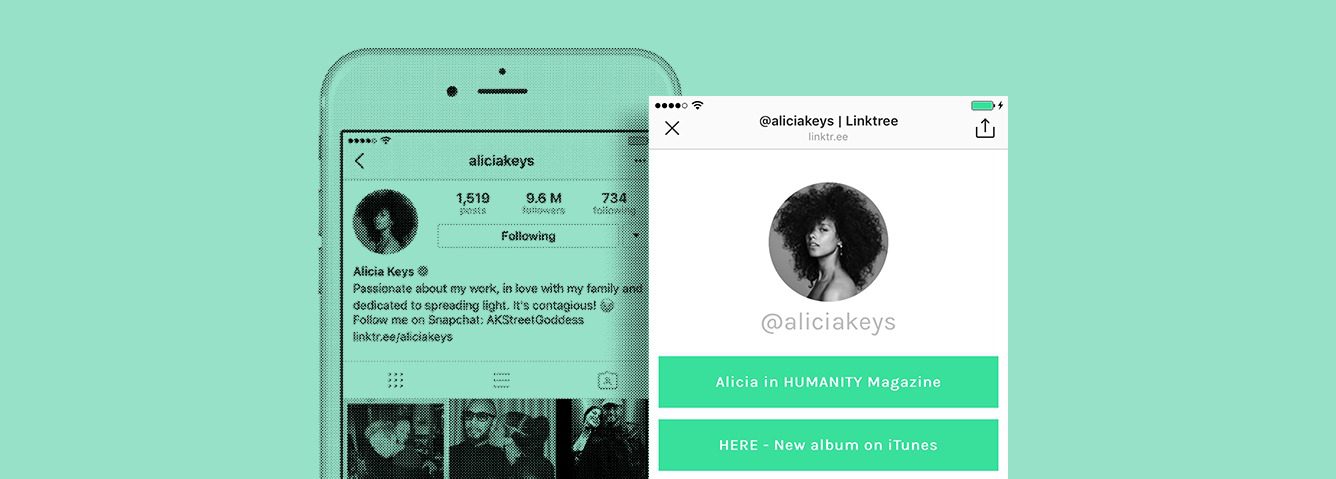
You get one link in your Instagram bio. One link on TikTok. One link on X.
For a blogger, creator, or small business owner who’s trying to send people to your latest post, your products, your newsletter, and your services all at once — that’s a problem.
That’s why the “link in bio” page exists. And if you haven’t set one up yet, or you’re still relying on a third-party tool like Linktree to host yours, this post is for you.
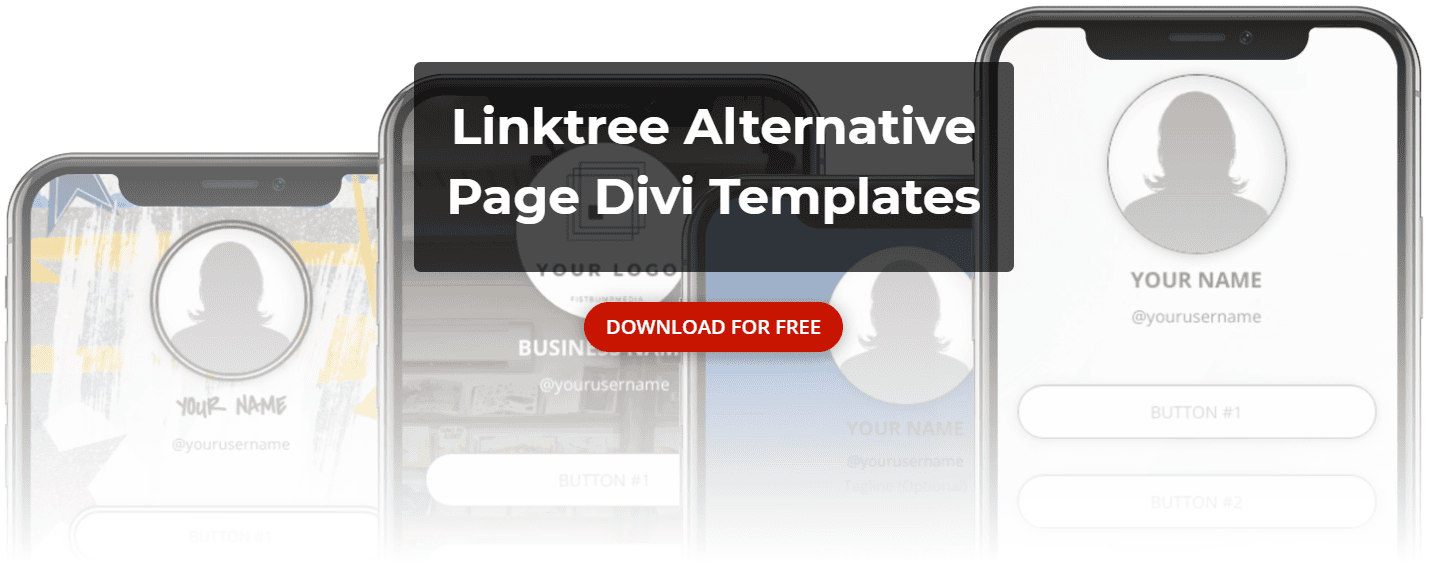
I’m going to make the case that building your own bio links page — on your own website — is almost always the better move. And I’ll give you free Divi templates to make it easy to do exactly that.
What Is a Bio Links Page (and Why You Need One)
A bio links page — sometimes called a “link in bio” page — is a simple webpage that collects your most important links in one place. It’s designed to sit behind that single bio link on Instagram, TikTok, X, YouTube, LinkedIn, or wherever your audience finds you.
The concept took off with Instagram, where you still can’t add clickable links to individual posts. But it’s expanded far beyond that now. Creators use bio link pages across every platform, in email signatures, on business cards with QR codes, and even inside books to point readers to resources.
This helps bloggers (and content producers of all kinds) share posts on Instagram about new content. Just mention “link in bio” (or hashtag #linkinbio), and people can click-thru that link to get to the content you want them to see. So where you get one link to point people to, using a landing page like this gets people to where you want them much more efficiently.
Even better, you can integrate other features like newsletter signup, products or services, event details, or other promotions you’re running.
Linktree Alternatives
Linktree is still the most recognized name in bio link tools, and it’s gotten more capable since it launched. The free plan gives you unlimited links and basic analytics. Paid plans ($5-$24/month) add custom domains, scheduling, and more advanced features.
But Linktree has a real limitation that doesn’t get talked about enough: it sends your visitors to Linktree’s domain, not yours. Instead of yourbrand.com/links, people see linktr.ee/yourname. That’s their brand, not yours — and it means you’re building traffic on someone else’s platform.
Here are the main alternatives worth knowing about in 2026:
Beacons — Popular with creators who want to sell digital products directly from their bio page. Has AI-powered features and a free plan, though the best tools require a paid tier.
Stan Store — Built for creators selling courses, coaching, and digital products. More of a storefront than a link page. Starts at $29/month with no free plan.
Pallyy — Good for social media managers who want bio links combined with scheduling and analytics in one tool. From $15/month.
Carrd — A simple one-page website builder that many creators use as a bio link page. Very affordable at $19/year for the Pro plan. Design-focused but no built-in analytics.
Build Your Own (Recommended) — This is the option I consistently recommend, especially if you’re already on WordPress. You get complete control over design, branding, and data. Your visitors land on your website, not a third-party platform. Your analytics work. Your SEO benefits. And with the Divi theme — which is included in all of our WordPress hosting plans — you can build a beautiful bio links page in under an hour using the free templates below.
The Anatomy of a Good Bio Links Page
Especially if you’re going to build your own page, you should understand a few key concepts for how to build it well.
The first rule for your bio links page is to keep it simple. You don’t want to overwhelm people with so much stuff that you end up scaring them away. Remember, the main goal is to just get them to the next step. So focus on the core elements that encourage them to tap through to that important content.
A few key elements you’ll want to consider are:
- A profile pic (or logo) – This is a key branding element.
- Your name – Another important core branding piece.
- Short description (optional) – If you do this, keep it brief. It’s not the place for your full story (like your about page), but definitely good for a brand-building tagline or short description statement.
- Quick link(s) to recent content – Have a button going to your latest blog post, or even add a blurb from the post itself.
- High priority links – Use buttons to connect people to key pages on your website, including books, products, etc.
- Email opt-in – Add a simple opt-in on the page, or use a button to link to it.
- Social media links – Make it easy to connect in other places you engage with your audience.
- A clear primary CTA – Don’t just list links equally. What’s the one thing you most want someone to do right now? Make that button stand out visually from the rest.
To make this process simple for you, we’ve created several templates that you can upload to your website (using WordPress with the Divi theme), and customize from there. Check out the demos of these Linktree-alternative pages, and download your free templates now!
How To Build Your Own Bio Links Page (With Divi)
We use the Divi theme by Elegant Themes for bio link pages because it gives you complete control over design without needing to write code. It’s also included in all of our WordPress hosting and maintenance plans, so if you’re already hosting with us, you already have it.
If you don’t have Divi yet, you can grab it through our affiliate link — it’s one of the tools we genuinely recommend and use every day.
Once you import the layouts to your website, you can load them to a new page using the Divi Builder. Follow these instructions:
- Add a new page
- Click the “Use The Divi Builder” button
- Select “Choose a Premade Layout”
- Go to the “Your Saved Layouts” tab
- Pick the template you’d like to start with
After that, you can edit each module however you’d like.
Basic Layout and Design
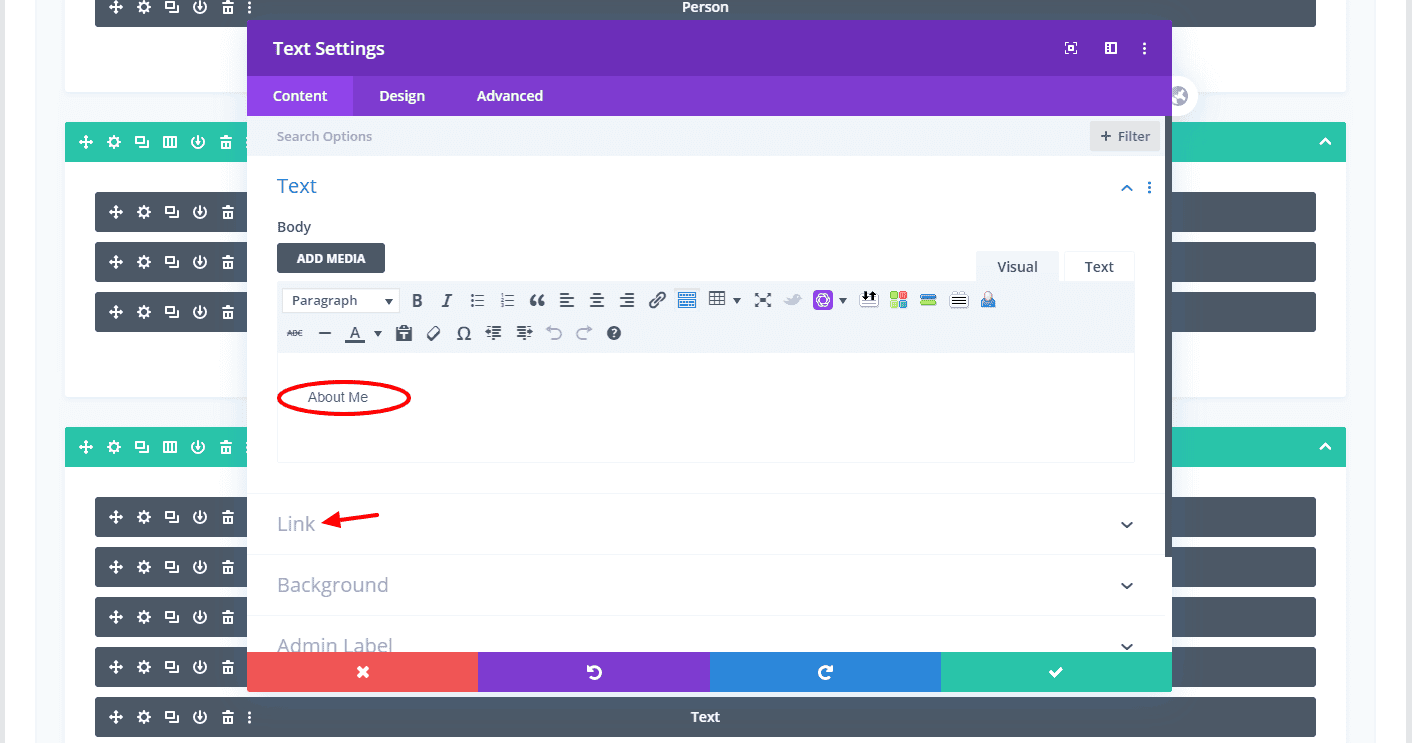
The templates use Text modules for each of the buttons on the page. You can change the text that appears on the button, and update the link that it points to.
If you’re feeling adventurous, you can even change styles, animations, or any other properties you’d like.
The page background can be updated in the Background settings in Section Settings (click the gear icon on the blue bar). There you can change the background image or colors.
And, as with any other page built in Divi, you can add all kinds of modules to add to your page. It’s still best to keep the page simple, but modules like Email Optin, Countdown Timer, Search, Testimonial, Video, and many others can really help you take your bio links page to the next level.
To ensure the best look, toggle over to the Phone View to see how everything appears. Assuming that you’re using the page for your bio link on Instagram, nearly all of the visitors to the page will likely be coming from mobile devices. So it’s most important for it to look good there. And if you want to adjust for potential desktop viewing, you can do that too. But desktop should definitely take a backseat to mobile in the design and appearance on this page.
Page Attributes Settings
Once you have the page elements in place and are ready to publish the page, there are a few key attributes that will be important to consider. The first of which is the permalink structure. Ultimately, the page name can be whatever you’d like. But simple is best. And visitors on Instagram will see the link name in your bio. While simplicity is the key, feel free to have fun or give it a call-to-action kind of feel. It’s okay to let your personality show. A few examples for permalink page names are:
- yoursite.com/bio-links
- yoursite.com/welcome
- yoursite.com/hi
- yoursite.com/instagram
- yoursite.com/as-seen-on
- yoursite.com/click-me
- yoursite.com/hello
Also, you’ll need to update a couple of settings in order to ensure everything displays properly. Look for the Page Attributes widget and update the following settings:
- Parent: (no parent) – Do not make this page a sub-page to another page (like About, etc). That will extend the permalink unnecessarily. Keep this page on the first level (no parent) in order to keep the permalink short.
- Template: Blank Page – This setting removes all of the normal website headers and footers. Everything you need in the design for these pages is included in the layout itself, so you don’t want to complicate everything with more navigation and other elements.
Whether you’re using the free templates or starting from scratch on your own, you’ll love the flexibility and virtually unlimited design options and control you can get. And hosting all of this on your own website means that you’ll get it all at no additional cost!
How To Use a Bio Links Page In Your Instagram Bio
Once you’ve published the page on your website, it’s time to add it to your Instagram bio. To edit your bio:
- Go to your profile
- Tap the Edit Profile button next to your current bio
- Type (or copy/paste) your page URL (permalink) in the Website field
- Tap the Done (or check icon) button
Whenever you make changes like this, it’s always best to visit your profile and tap the link to ensure everything works as it should. But easy-peasy… you’re new Instagram linktree-like bio links page is live! Now you can mention in your posts, “link in bio,” to get visitors to all of the great stuff you want to direct them to.
Other Places You Can Use Your Bio Links Page
While these kinds of bio link pages started with Instagram, you can use them just about anywhere. And if you want to get super cool, you can create separate linktree pages for various platforms. For example, the bio links page you want people to visit coming from your LinkedIn page may look a little different than the one for visitors from Instagram.
Get creative and explore different ways to use pages like these. Here’s a quick list to inspire you:
- TikTok bio – TikTok now allows one link in bio for business accounts. Your bio links page works perfectly here.
- YouTube channel – Add it to your channel description to give subscribers a single place to find everything you offer.
- LinkedIn profile – Share links to your portfolio, previous work, email, and social profiles
- Twitter bio – Connect people to your other social media profiles and important links
- Business cards – Increase the dynamic with special links and content for people you share your business cards with
- QR Codes – Point a QR code on posters and other print advertising to share specials, etc with people
- Your email signature – Important content to direct people to from your emails
- Links in your book(s) – Share key resources with readers of your books
The possibilities are really endless. And if you’re doing this on your own website, you can create as many of these specialized pages as you want. So change designs, content, and everything for really just about any audience you can imagine.
Final Thoughts
The tools in this space have gotten more sophisticated since bio link pages first took off — but the core argument for building your own hasn’t changed. Your website is your real estate. Every visitor who lands there instead of a third-party platform is a visitor you can track, retarget, and convert.
If you’re on WordPress with Divi, you’re already set up to do this. Download the free templates below, customize them with your links and branding, and you’ll have a bio links page that looks professional and lives on your own domain.
And if you want Divi but don’t have it yet — grab it here (affiliate link, and genuinely what we use and recommend). Or if you’d rather have someone else handle the whole website setup, our hosting plans include Divi as part of the package.
Download the free Divi bio links templates here →
Want the templates plus tips for growing your platform?
Download the free Divi templates and I’ll also send you occasional resources on growing your audience, building your platform, and making the most of your website. No spam — just practical stuff.
by Dan King | Nov 15, 2019 | social media marketing strategy
You’re probably already doing it. Failing, that is. Most small business owners I know fail miserably at social selling. They are incredible contractors, interior designers, real estate agents, and whatever else they do. It’s just that being great at your craft doesn’t mean you’re an expert in the nuances of social media marketing.
Here’s the deal. Most small business owners I know come at social media with a “sell it” mentality. Every post needs to be a homerun sales pitch. And then they get frustrated when they fall flat and fail to produce any results.
“Social media doesn’t work for us,” they say.
It may seem counterintuitive, but the best way to sell on social media is to stop selling. Platforms like Facebook, Twitter, Instagram, and LinkedIn are not inherently sales platforms. They are social platforms. When you think about buying something, you go somewhere like Amazon. That’s a sales platform. When you get onto social media sites, you’re looking to connect with people. And in those connections, you share (and discover) ideas that help you shape your life.
That’s why looking to social media strictly for selling is the wrong approach. You should be there to connect. And if you’re really good, to tell a story about who you are, what you do, and how that intersects with your customers – and potential customers – lives.
The North Wind and the Sun (Aesop’s Fables)
There’s a great fable from Aesop that serves as a guide for how you should approach your social media strategy for business.
The Wind and the Sun are arguing over is stronger. Suddenly they see a traveler coming down the road. They decide to settle to an argument over whoever can get the traveler to take his coat off. The Wind blows as hard as it can, but the traveler tightens his coat up even more. Then the Sun softly shines its rays on him. The traveler suddenly feels hot and finally removes his coat. Declaring the Sun, the winner.
The lesson here is that persuasion is a far better tool than force. The same applies to your social selling strategy. You’ll get much further with a more kind and humble and gentle approach than you will by blasting at them.
Forcing It Never Works
“I want to get on social media and hang out with a used car salesman.”
– No one ever.
Here’s my big challenge to you. Don’t be that guy. You know, the one who tries to sell you a car just because you have a driver’s license.
Don’t get me wrong. You probably have a great product or service. And it likely could make people’s lives much better. The problem is in the approach, not the product. For car buyers, 60 percent of the process occurs online. People search third-party websites (78%) and dealer/manufacturer websites (53%). So much of the legwork for car buying happens like this because people don’t want to deal with the pushy salesman. We naturally reject that kind of in-your-face tactics.
If you go into your social selling approach like the North Wind, you’ll get the same result. People will pull that coat tighter and try to protect themselves from your blow-hard approach.
The Art of Persuasion
Social selling is about persuasion. And persuasion is about influencing convictions or beliefs. In our fable, the Sun didn’t force the traveler to take off his coat. Instead, he created an environment where that outcome was more likely. The traveler became convinced that taking off the coat on his own was the right idea.
In a social media setting, sales persuasion looks like:
- Sharing your story in a way people can relate to
- Establishing yourself as an expert in your field
- Making them look smart to their friends by being a helpful resource
- Being the fun guy in the room
You’ll get to social selling opportunities when you present the kind of personality people want to do business with. Social selling is the result of creating the right kind of environment. When they decide the time is right, they’ll buy from you.
Final Thoughts on Social Selling
The bottom line is that there are customers out there to be found on social media. Lots of them! But winning at social selling is more about taking the softer and more persuasive approach than it is about forcing your sales pitch on people.
It’s also worth noting that social selling works best when you understand the differences between how people use each platform. What you do on LinkedIn should look very different than what you do on Facebook. They are different kinds of parties. The key is to connect well – and naturally – in the environment you’re in.
Get this right, and you’ll have sales rolling in through social media. That’s how we’ve done it. And hit us up if you want to talk through what might be the right digital marketing approach for your small business.



 Growing your business requires that you find ways to increase your sales revenue. That’s foundational. New sales are the lifeblood of every business. So I want to show you what we did to get a 154% increase in monthly new sales revenue by making one simple change.